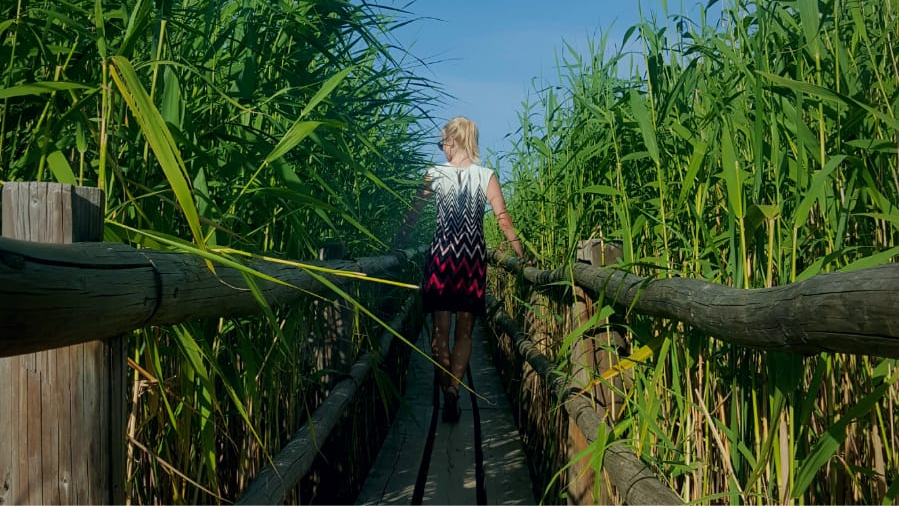
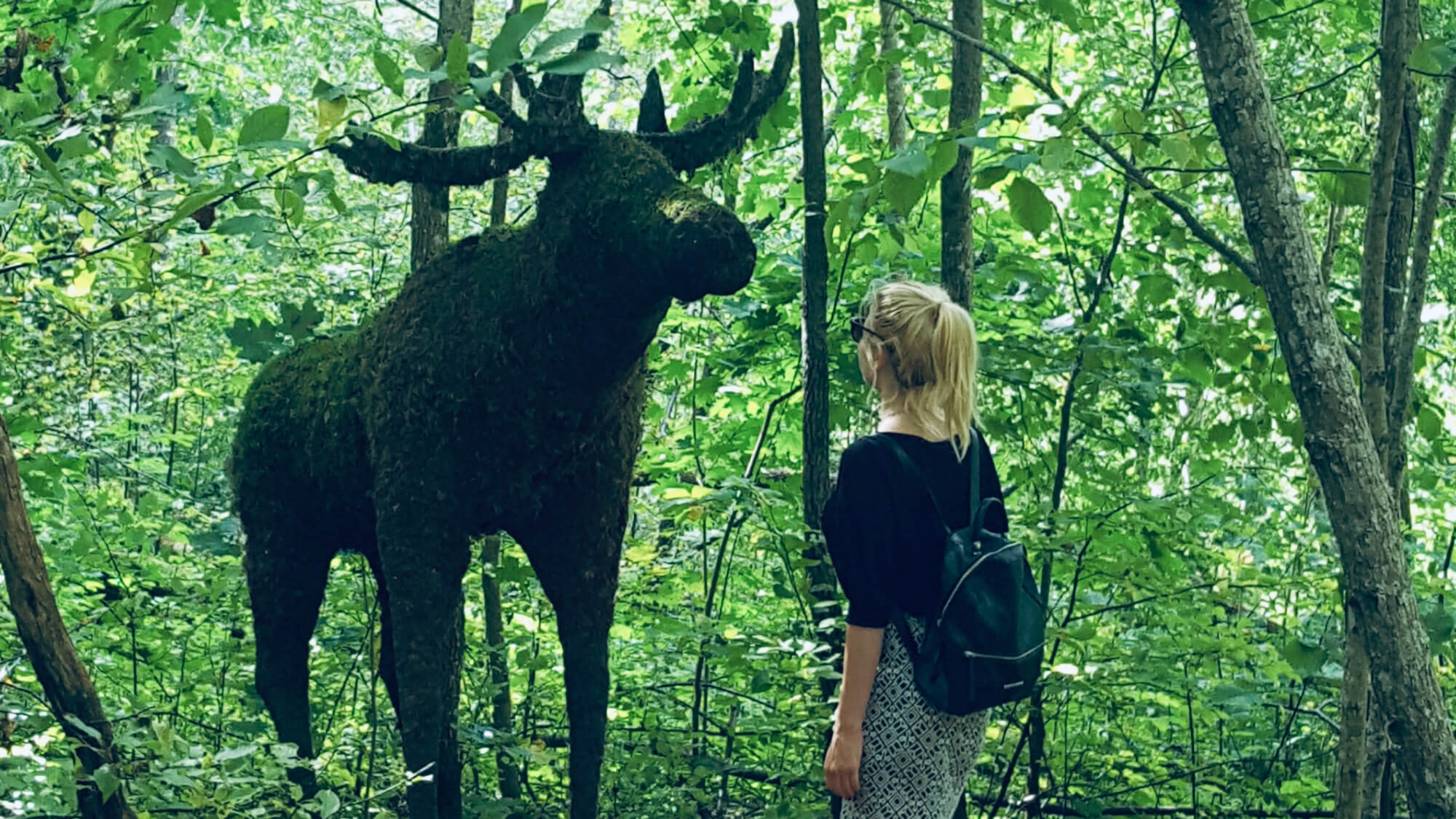
What do you do when your travel list is bursting with must-see places along the coastline from Riga to Kolka, and you need a break in nature to recharge your batteries? You plan the perfect day trip, pack a picnic, and hit the road. This road trip to Kurzeme combines enchanting nature trails, encounters with friendly wild horses, and a tranquil finale at the Kolka Cape.
Chances are you’ve been to this area before, as it’s known for its pristine white sand beaches, just a short distance from Riga. However, you might have missed the enchanting nature trail here, which is famous for its vibrant botanical plantings and picturesque wooden cottages.
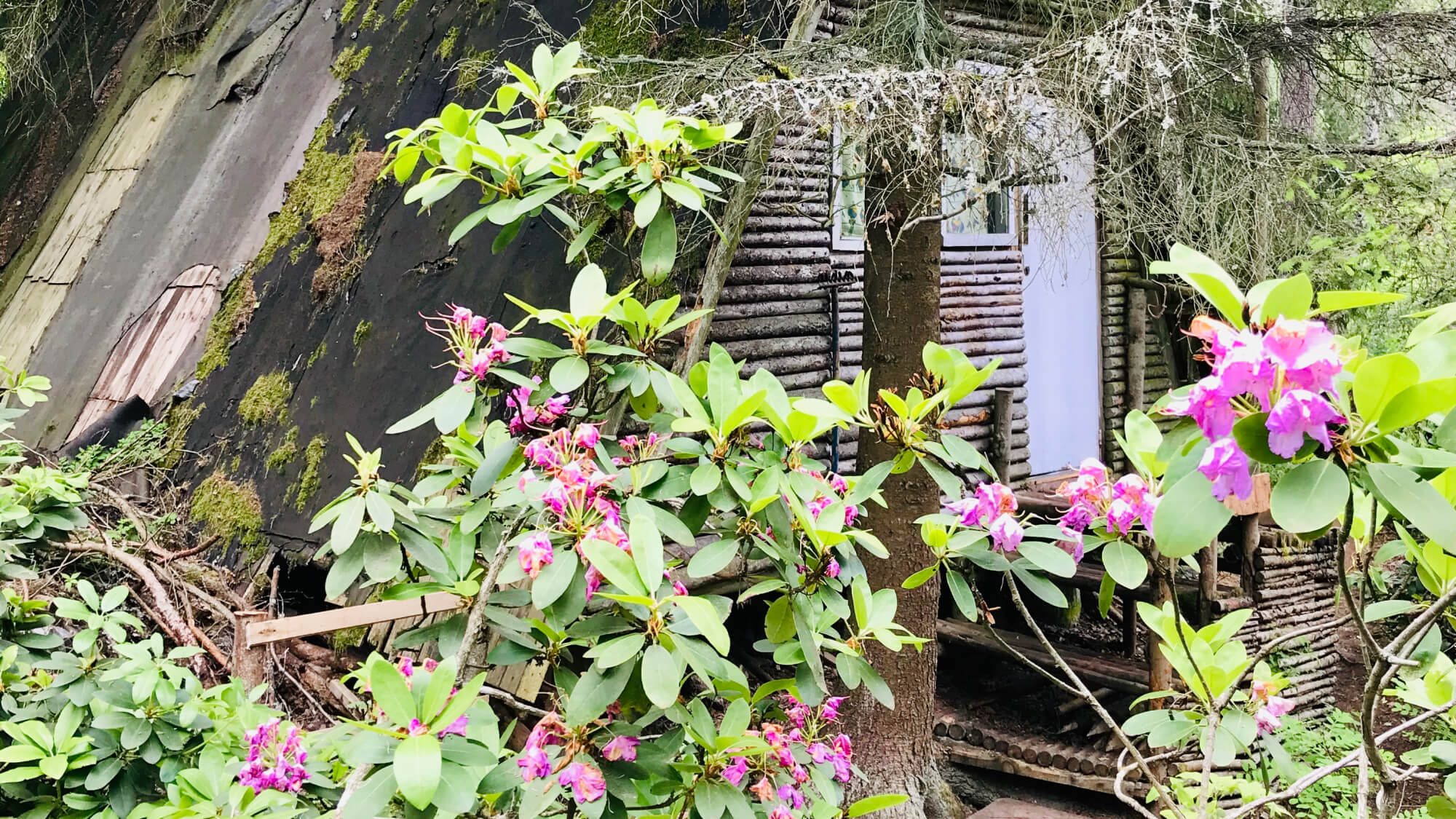
Lāčupīte Arboretum Nature trail feels like stepping into a hidden, romantic jungle. Winding paths are shaded by rhododendrons (a must-see when in bloom), and charming details create an almost dreamlike atmosphere. Whether you’re here to lose yourself in thought or take a thousand photos, it’s the perfect start to your Kurzeme road trip.
Here, irregularly shaped stones extend outward from the shore into the water, where waves crash in dramatic bursts. The stones’ varied shapes and colors create a natural mosaic that is a photographer’s dream.
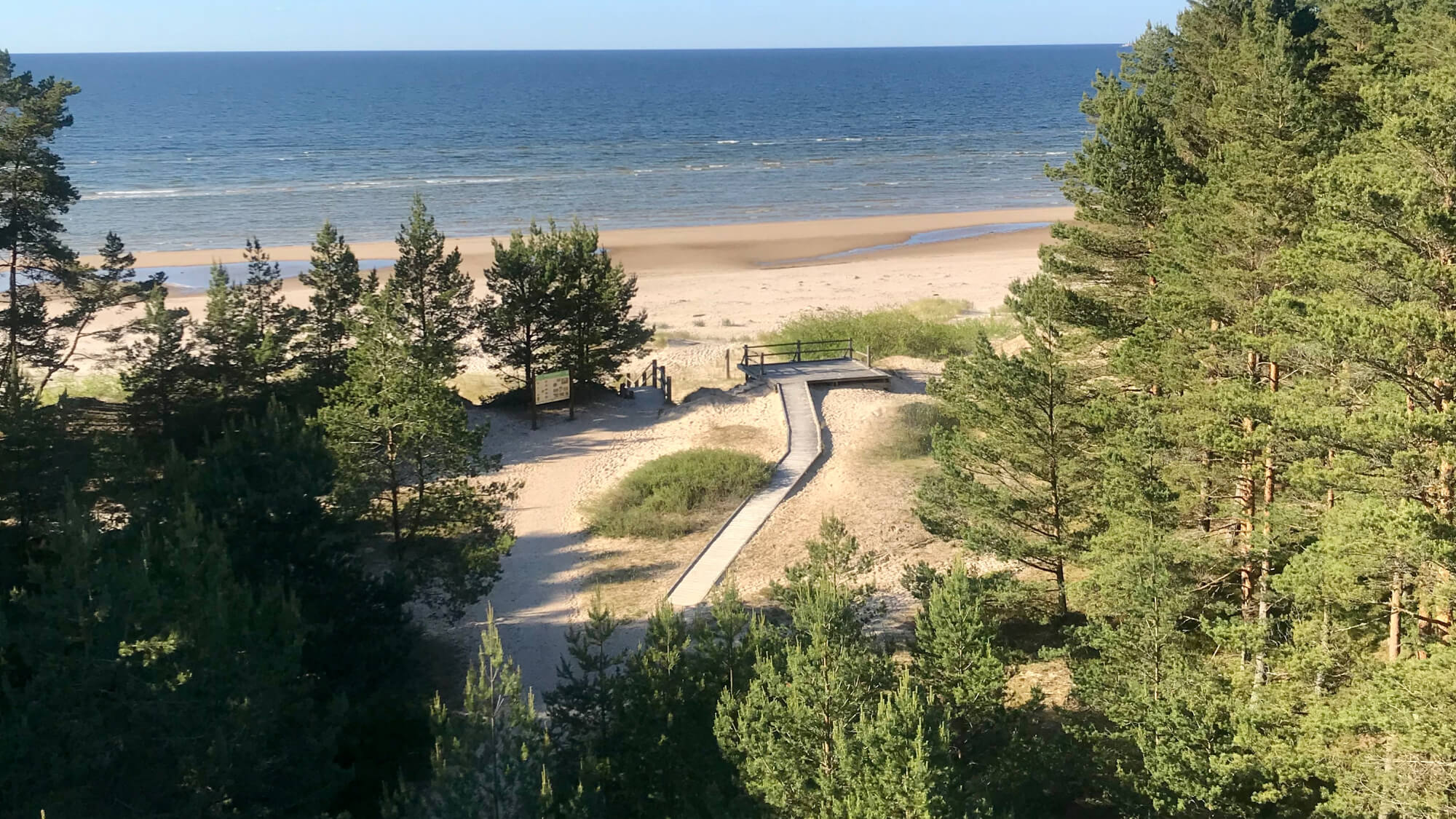
It’s an ideal spot for a quick pause—a 10-minute detour on your Kurzeme roadtrip to snap some photos and enjoy the refreshing breeze. And if you feel like lingering longer, a wide sandy beach right next door offers the perfect place for a picnic you hopefully packed with you.
But if not, let’s continue our road trip to Kurzeme with another adventure.
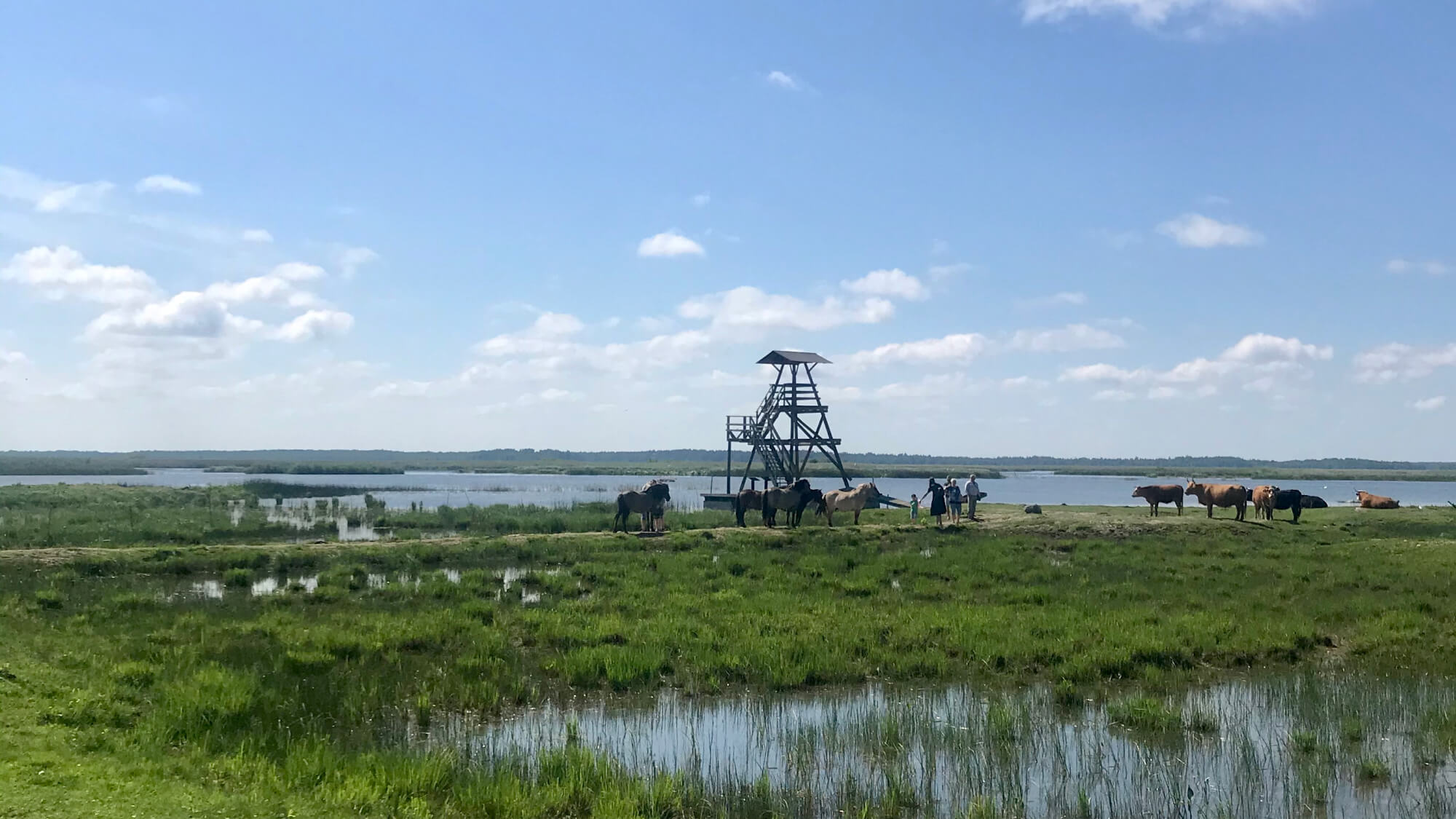
A lush green meadow blends seamlessly into a shimmering lake, where wild horses and cows roam freely across the expansive field. Watching their carefree adventures is a joy in itself.
For me, this place embodied freedom—a moment of pure serenity.
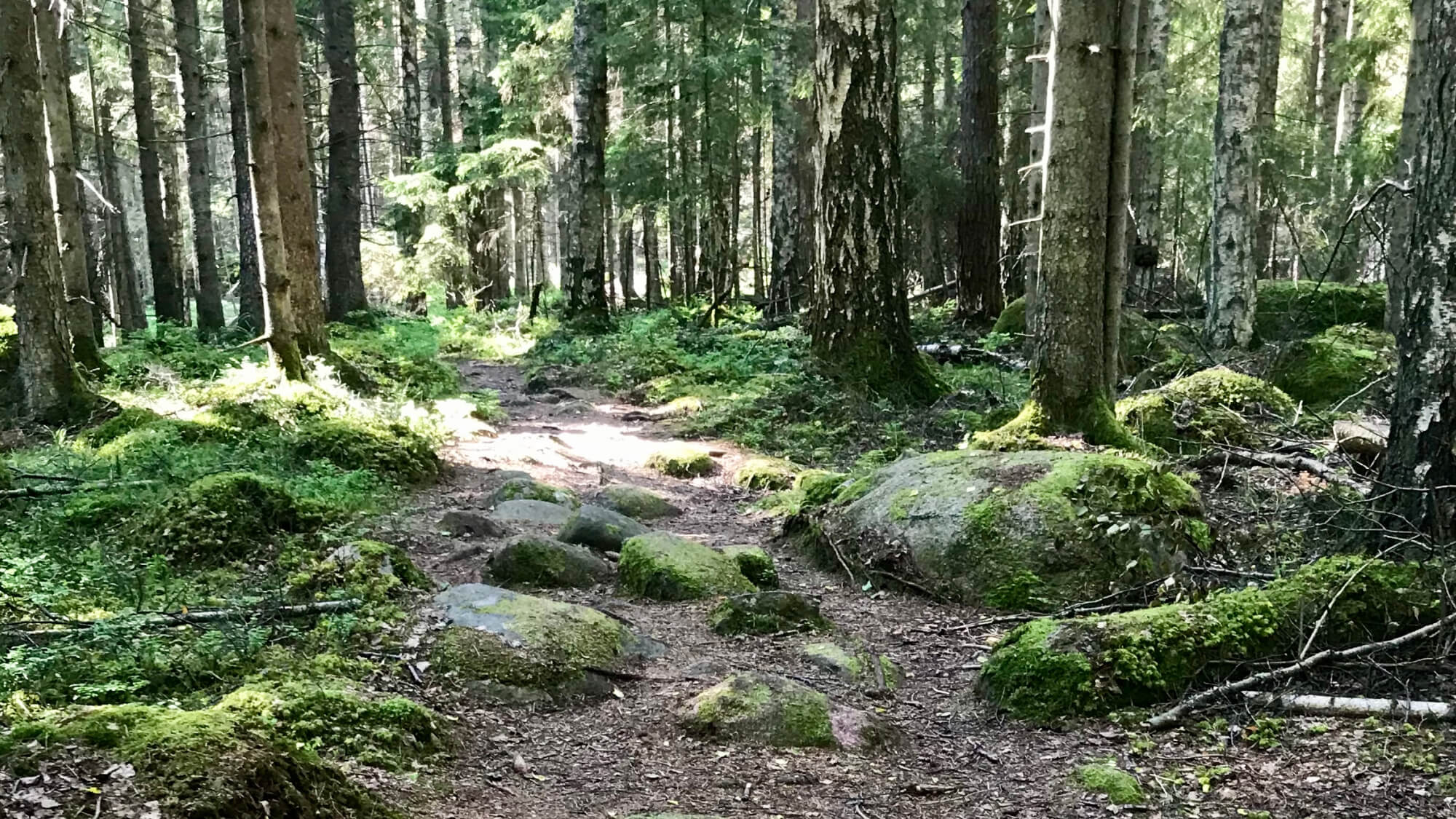
Next, venture to the Kaltenes Kalvas Nature Trail. This hidden gem in Kurzeme feels like a pocket-sized version of the mystical Pokaiņi Forest. The trail’s rugged beauty lies in its thick, untamed woods, where moss-covered rocks of all sizes lie scattered across the forest floor. According to legend, the Devil himself scattered these stones here.
Kolka is a place where the land meets the sea in a breathtaking dance. Begin your visit with a climb up the 16-meter-tall wooden lookout tower, where the panoramic views were nothing short of spectacular.
From there, you can wonder barefoot along the beach, the water lapping at your feet as you make your way to the very tip of Kolka Cape. Along the way, the forest revealed its quirky barrel-shaped cottages, adding a dash of whimsy to the journey.
Kolka Cape (Kolkasrags)
At the cape’s end, you’ll find a small pile of stones—the weathered remnants of an old lighthouse. With every storm, the pile grows smaller, and one day, it may vanish entirely. But for now, it stands as a quiet monument to the past, with the silhouette of the current lighthouse visible far out at sea.
At first, I struggled to see what made this beach special compared to others. But there are 2 points of subtle magic:
Two Waters, Two Temperatures: On one side of the cape is the sea; on the other, the gulf. Test the waters—often, they feel different! One side may surprise you by being warmer than the other.
Colliding Waves: At the cape’s tip, waves often meet from opposite directions, crashing together at an angle. Unfortunately, the wind wasn’t in our favor, so we missed this phenomenon during our visit—but it’s something to look out for.
As the day winds down, our road trip to Kurzeme is coming to an end. But Kolka is renowned for its stunning sunsets, so if you plan to stay the night here, be sure to witness the sun dip below the horizon—a truly unforgettable experience. If not then have a safe journey back home or to your accommodation for the night.
Thoughts?
This journey from Riga to Kolka offered exactly what we were looking for: peaceful moments, breathtaking scenery, and a chance to recharge. By the end of the day, I felt deeply satisfied with our Kurzeme road trip itinerary—and delightfully tired.
While we managed to fit everything into a single day, there was a lot of walking, so this road trip to Kurzeme could easily be spread across two days for a more relaxed pace.
A vibrant tapestry of color, culture, and pain—that’s Sarajevo, the heart of Bosnia and Herzegovina. This is a city that proudly wears its architectural jewels alongside the scars of its turbulent past. So let’s find out what to see in Sarajevo together!
As you wander through its streets, you’ll notice striking contrasts all around you. On one side, a buzzing market hums with life, while locals chat and enjoy Bosnian coffee in cozy cafés. On the other, the red petals of a Sarajevo Rose mark the pavement, a sad reminder of lives lost. Look up, and you’ll see the majestic Olympic mountain standing quietly. Blending Ottoman, Austro-Hungarian, and Yugoslav influences, Sarajevo tells a story that is impossible to forget.
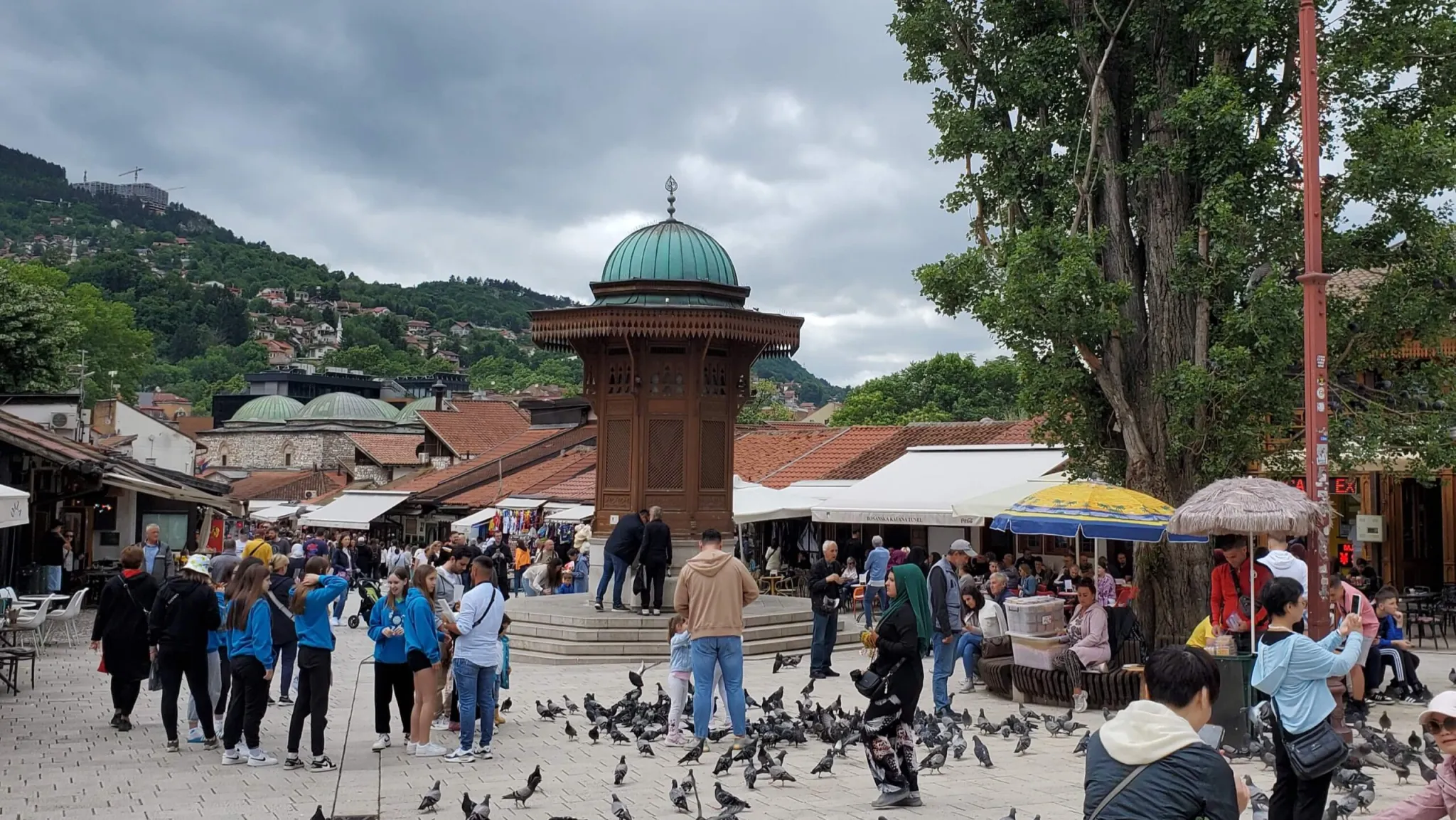
To truly experience the energy of Sarajevo, head to Baščaršija Square. It’s always bustling, always full of life. Friendly chatter drifts from nearby cafés and shop stalls. Locals go about their day, while tourists pause to snap photos of the square’s iconic centrepiece: the Ottoman Sebilj fountain. With its wooden lace, intricate carvings, and green dome, this timeless fountain has been offering free refreshment to travellers for centuries.
Here, you will face an important choice. Do you want to return to Sarajevo one day? According to legend, you must drink the water from the fountain to ensure you’ll come back.
However, the fountain has a bit of competition for your attention. As soon as you arrive in the square, you’re greeted by pigeons—dozens, maybe hundreds of them. They flutter around your feet, settle on nearby rooftops, and take flight in unison, filling the air with soft coos. It’s as if the entire square is wrapped in a living, feathery blanket. Have you ever seen this many birds in one place?
Join Sarajevo Food and Culture Tour to Deep Dive in the cuisine and Tradition
Are you hungry?
If you want to experience Bosnia and Herzegovina fully, the question isn’t just what to see in Sarajevo, but also what to taste and explore. The Sarajevo Food Tour offers the perfect opportunity to dive into the rich culture of Bosnia and Herzegovina, engaging all your senses.
Your taste buds will delight in sweet baklava and even sweeter Turkish delights, while your mind is captivated by fascinating stories of local crafts and history. This isn’t just a food tour—along the way, your guide proudly shares tales of Sarajevo and Bosnia and Herzegovina, bringing the city’s rich heritage to life. Whether you’re curious about the region’s history, culture, or the rhythms of daily life, your guide is happy to answer any questions, making the experience as personal as it is enriching.
With the rise of the Ottoman Empire, Sarajevo flourished as a city of trade. Centuries have passed, rulers have come and gone, but the Sarajevo market remains the beating heart of this magnificent city.
If you found yourself dazzled by the sights and sounds of Mostar’s market, get ready—Sarajevo takes that vibrant energy to a whole new level. The market is a grand tapestry of colors, patterns, and textures, a labyrinth of passages filled with countless little stores. As you wander through, you’ll discover an incredible array of treasures: local delicacies, traditional coffee makers, handmade jewelry, and even bullets transformed into striking works of art.
Whether you’re on the hunt for something specific or just browsing, Sarajevo’s market is sure to surprise you with its unique finds. One thing is certain: you won’t leave empty-handed.
In addition to all the fun shopping, Sarajevo market is also home to some fascinating pieces of architecture. Among them stands the Sarajevo Clock Tower, a historic marvel with a unique story to tell.
If you glance at the Sarajevo Clock Tower and then check your own watch, you’ll notice they show different times. Surprisingly, both are correct. Confused? Let me explain.
In our modern world, each day is divided into 24 hours, with each hour lasting 60 minutes. But during the Ottoman Empire, a different system was used—Ala Turca time. In this system, the day was split into two 12-hour periods: one from sunrise to sunset (daytime) and the other from sunset to sunrise (nighttime). This meant that the length of an hour wasn’t fixed; it changed with the seasons. For example, during winter, a nighttime hour could be longer than a daytime hour, and in summer, the opposite was true.
Never heard of this? You’re not alone. That’s because there’s only one public clock in the world still keeping time Ala Turca—and it’s standing right in front of you. Many tourists walk right past it, unaware of the centuries-old rhythm it preserves. But now you know its secret. And here is another one: a clock like this requires manual adjustment, meaning the centuries-old profession of a timekeeper still exists in Sarajevo.
There is definitely a lot to learn about Sarajevo’s Ottoman architecture. But as variety is the spice of life, let’s mix it up and explore a bit of Sarajevo’s Austro-Hungarian legacy.
Sarajevo Town Hall is impossible to miss. Grand, glamorous, and radiating color, this iconic building commands attention. Its striking palette of warm yellow and vibrant orange, paired with playful stripes, feels like a burst of sunshine in the heart of the city. Yet, while its lively colours exude cheerfulness, the intricate details and architectural sophistication elevate it to a realm of undeniable grandeur.
As you stand before its façade, you might think of Sarajevo Ottoman architecture. The arches and ornate embellishments certainly echo an Islamic influence. However, this masterpiece was built in the Neo-Moorish style, a 19th-century European movement that sought to romanticise and reinterpret Islamic design. It’s a perfect fit for Sarajevo, a city where cultures and histories blend seamlessly.
What to see in Sarajevo City Hall
The interior of Sarajevo Town Hall is just as breathtaking as its exterior. Step into the grand entrance hall, and you might feel your jaw drop. Every inch is a feast for the eyes. Your gaze moves from the richly patterned floor to the columns adorned with decorative arches. Then your eyes catch the intricate wall paintings, only to be drawn further upward to the second tier of arches and an elaborate ceiling. Finally, the pièce de résistance: a massive stained-glass mosaic covering the roof, casting colourful light across the hall. It’s hard to imagine how so much glamour could be contained in a single space.
After this dazzling display, the other rooms do feel simpler by comparison, focusing primarily on exhibitions. But it may just be that the light doesn’t seem as bright because we have just been looking at the sun.
The next part of this article talks about darker parts in Sarajevo history including mentions of war. If you find these topics triggering feel free to skip over it and jump to the last part of the blogpost.
But as bright and vibrant the building is, it also has a very dark part. On the bottom floor of Sarajevo there is an exhibition on War time Crimes against humanity. It’s the most heartbreaking thing I have ever seen. I came out crying and unable to comprehend how one could take another human being through so much suffering.
On this sad note we are stepping into the sad chapters of Sarajevo story. It is the city that survived a sage and a city where World War One started, so there are more exhibits to see in Sarajevo on this topic, but these are a couple of places where as much as I was able to handle.
In a laurel wreath an eternal flame burns in memory and honour for those who lost their lives during the Second World War when Sarajevo was fighting for its freedom. It’s a powerful symbol of Sarajevo’s resilience.
The Pain Behind Sarajevo Roses
As you walk through Sarajevo, you will notice unusual marks on the pavement—cracks in the concrete filled with red, resembling splatters of blood. These are Sarajevo Roses, silent yet powerful memorials that mark places where mortar shells exploded, claiming countless lives during the siege of Sarajevo.
Each rose tells a story of unimaginable loss, turning scars into poignant reminders of the city’s resilience. There are around 200 of these roses scattered across Sarajevo, blending into the urban landscape yet impossible to ignore once you know their meaning.
After this I believe we need a bit of fresh air to clear up our minds and dry our tears. And what better way to refresh than with some crisp mountain air? So let’s head to Trebević Mountain.
What to See in Sarajevo Olympic Mountain?
Breathtaking Heights Without Breaking a Sweat: Sarajevo Cable Car
While hiking Trebević Mountain might sound adventurous, the ~8-hour journey one way isn’t exactly practical for a packed itinerary. Thankfully, there’s a much easier option that saves your legs without sacrificing the views—the Sarajevo Cable Car.
As you ascend, you glide over the city’s rooftops, which grow smaller and smaller until they resemble tiny tiles in a mosaic. The cable car offers a unique perspective of Sarajevo, blending the urban landscape with the surrounding natural beauty.
Once you reach the top, you’re welcomed by a symbol of Sarajevo’s Olympic legacy: the iconic Olympic rings. And then, something unexpected—wild horses roam freely in the area. These majestic creatures, with their glossy coats catching the sunlight, move gracefully across the mountain. While they are beautiful to watch, it’s important to keep a respectful distance. These are wild animals, and approaching them could be dangerous. Admire them from afar, letting their presence add a touch of magic to your visit without disturbing their natural behaviour.
The panoramic views at the summit are nothing short of breathtaking. Blue, fog-kissed mountains stretch endlessly into the horizon, while the city of Sarajevo lies below, its red-roofed houses dotting the valley. It’s a picture-perfect scene you’ll never forget.
Walking the Olympic Legacy: Sarajevo Bobsleigh Track
A lot has changed since Sarajevo hosted the Winter Olympics in 1984, but a few relics from that grand event remain. Among them is Vučko, the cheerful wolf mascot, whose face you’ll still find on souvenirs and murals. And then there’s the abandoned bobsleigh track, just a short walk from the cable car station—a haunting yet fascinating piece of Olympic history.
Stepping onto the bobsleigh track feels bittersweet. This concrete path, once alive with the rush of sleighs and the roar of the crowd, is now overgrown with plants and adorned with colourful graffiti. Some say it’s become an open-air gallery, but I can’t help to think of the vibrant street art just masking the sadness of its slow decay. It’s both a reminder of the city’s shining moment on the global stage and the passage of time since.
Thoughts?
Although there are so many intriguing things to see in Sarajevo, I believe it’s the stories the city tells that truly set it apart from any other place I’ve visited. So, if you visit Sarajevo, be sure to read the information and listen to the stories of locals. Every tour guide I’ve met in Bosnia and Herzegovina has been kind-hearted and willing to share the tales of traditions and history that have shaped Sarajevo into the vibrant and unforgettable city it is today.
FAQs About What to See in Sarajevo in Bosnia and Herzegovina
Is Sarajevo, Bosnia and Herzegovina walkable?
We used the car to get from our Airbnb to the Sarajevo city centre, but from there all the attractions I’ve listed on our guide on what to see in Sarajevo were within walking distance. To get to the top of the mountain you would either have to drive or go by the cable car though.
What to see in Sarajevo, Bosnia and Herzegovina if you have very limited time?
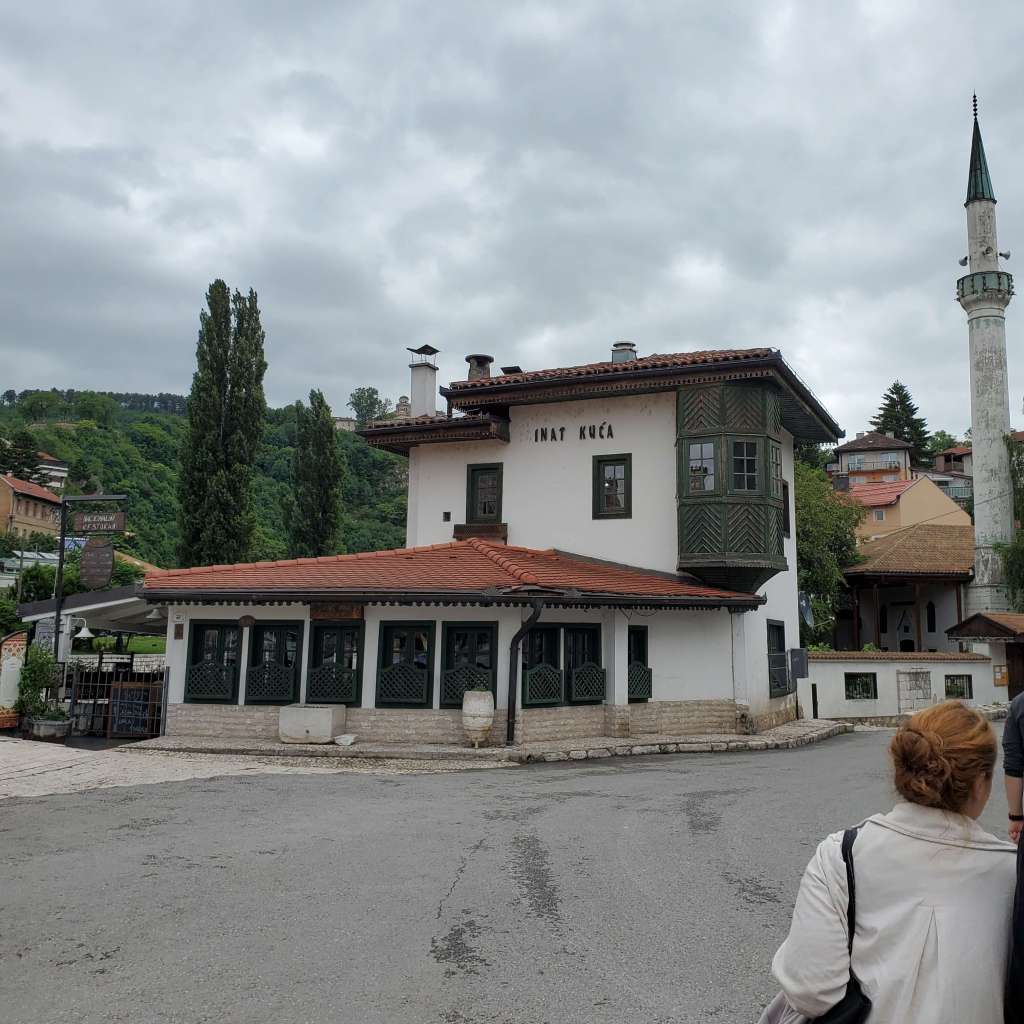
If I was pressed on time and had to pick only one or two places to see in Sarajevo, I would go with the Market and the Sebilj. Both perfectly reflect the lively, bustling vibe of the city.
What foods to try in Sarajevo, Bosnia and Herzegovina?
What to see in Sarajevo, Bosnia and Herzegovina if it rains?
Most of the places in our list of what to see in Sarajevo are outdoors. I do believe you can still enjoy most of them with an umbrella or a raincoat. But if you are looking for what to do in Sarajevo indoors you could consider – Sarajevo War tunnel, Gazi Husrev-beg Mosque and Sarajevo townhall.
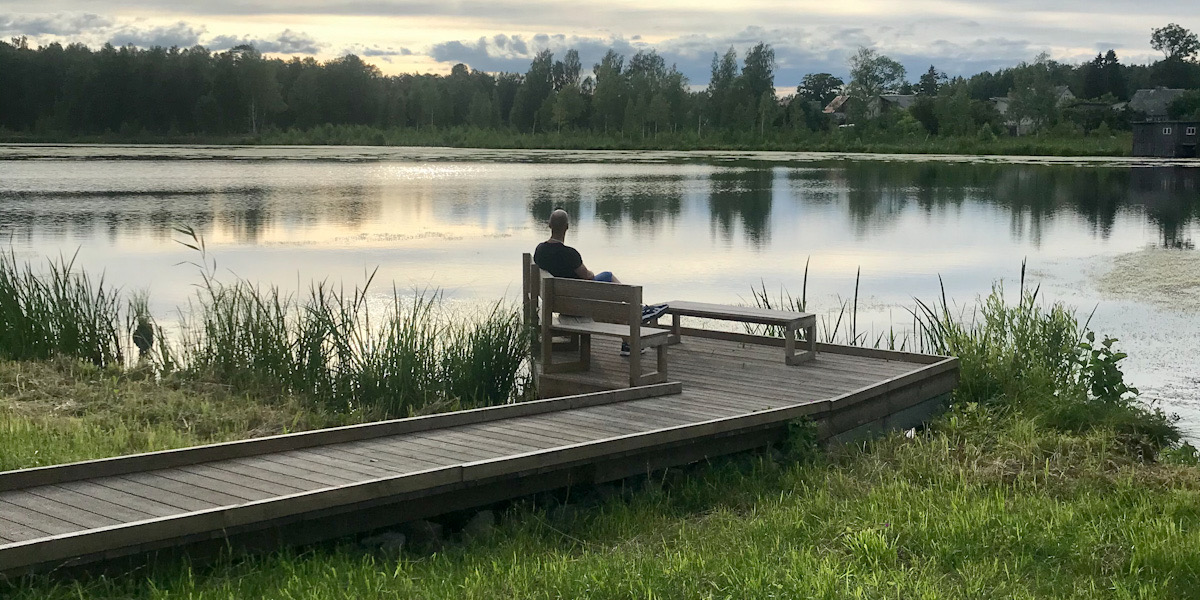
A question that never gets old—where can you find peace? Nestled by the tranquil shores of Lake Alūksne, serenity awaits. The best way to soak in this calm is on a summer evening, perched on a bench by the water. Or take a leisurely stroll to discover Alūksne’s hidden gems—climb one of Latvia’s tallest viewing towers, marvel at the unexpected sight of a temple in Latvia, and explore the historic ruins of Alūksne Castle.
This time, Alūksne wasn’t our destination but a stop on our way back from Estonia. With limited time, we couldn’t see all tourist attractions of Alūksne, but Pilssala and Tempļa Kalna Park stole our hearts. Curious why? Let me share the magic!
Walking along the well-kept paths, you can’t help but marvel at how thoughtfully this place is designed. Wooden boardwalks draw you closer to the water, while the lush green spaces seem to whisper, “Stay a while.” And the lamp posts—just look at them! Slightly bent, they appear to lean into the wind, adding a playful charm to the setting.
We notice stations where you can rent bikes, canoes, and catamarans—perfect for a day spent gliding over the water. The lake feels vast and tranquil, its surface almost mirror-like as the evening light softens. It’s easy to imagine spending the entire day immersed in the serenity of Lake Alūksne.
But the hour is growing late, and we decide to keep moving, eager to see as much of Alūksne’s attractions as we can before the sun dips below the horizon.
Our walk takes us across multiple bridges, each with its own unique character. The most famous is the “singing” pedestrian bridge on Tempļa Kalna Street, known to play music every hour during summer. Tonight, unfortunately, the timing isn’t on our side. Better luck next time, I suppose.
A Temple in Latvia? The Temple of Glory aka Rotonda
Latvia and temples—two concepts that rarely go hand in hand. As Latvians, we’ve had our own rich history of pagan gods and traditions, but to my knowledge, we didn’t worship them in temples. Yet, as we wander through Tempļa Kalna Park, a classical temple emerges before us, stopping us in our tracks. The Glory Temple—Rotunda—perches gracefully atop a small hill, its six elegant columns reaching skyward. It feels both out of place and perfectly at home in this tranquil setting.
Contrary to what one might think, this isn’t a tribute to Greek gods. Instead, it’s a memorial to the Great Northern War, uniquely honoring those on both sides of the conflict. The temple’s design adds an air of grandeur, inviting visitors to climb the hill for a closer look or capture its striking form in photos.
Yet one question lingers: why did someone choose to build a Greek-style temple here in Alūksne, so far removed from its classical roots?
How Many Attractions of Alūksne Can You Spot from the Viewing Tower?
Our next stop is the towering 37.8-meter wooden observation tower. Each step up the spiral staircase builds anticipation, and by the time we reach the top, the panoramic views are nothing short of breathtaking.
At the summit, an informative display highlights the attractions of Alūksne and nearby sights scattered across the landscape. Let’s make it fun—how many landmarks can you spot? Use the telescope provided for a closer look. From here, I can see the elegant Alūksne New Palace and the spire of its Evangelical Lutheran Church standing proudly in the distance.
If heights and stairs don’t scare you, this tower is the perfect starting point for your trip to Alūksne. It offers not only stunning views but also a chance to familiarize yourself with the attractions of Alūksne in one convenient, awe-inspiring place.
As the light fades, we make our way to Pilssala, where the medieval ruins of the Livonian Order’s fortress stand. They have seen a lot, so only a tiny part – the weathered stone walls and the restored southern tower are left to tell stories of knights and battles long past. The tower, with its wooden additions and pointed roof, is the most photogenic part of the ruins, and we can’t resist capturing it.
Now the sun has dipped below the horizon and it is time for us to end our Alūksne adventures and head home.
Thoughts?
Wouldn’t it be wonderful to stay here for a few days? I imagine waking up in a cozy lakeside cabin, sipping morning coffee by the water, and starting the day with a refreshing swim. With more time, we could explore more tourist attractions of Alūksne e.g. wander through Manor Park and admire the unique architecture of Alūksne’s New Palace up close.
Even in just a few hours, Alūksne leaves a lasting impression. The best part? Many of its highlights are within walking distance, making it easy to experience its charm, whether you’re here for a short visit or a longer stay.
Sometimes, it’s refreshing to escape the daily grind and plan something special—a chance to spend quality time together. Having previously walked the Kaņieris Reed Trail and loved it, I knew I had to return and take you with me. However, since the trail itself is quite short, let’s spice things up. Here’s a simple yet delightful plan: we’ll start with a boat or SUP adventure on Lake Kaņieris, follow it with a walk along the Kaņieris reed trail, and end the day with a cozy picnic on the bench near the bird watching tower. It’s a fantastic idea for an active date or even a fun family outing.
The Logistics of Water Activities on Lake Kaņieris
Given the popularity of Lake Kaņieris and the limited number of paddleboards available, making a reservation for paddleboarding is essential. Fortunately, there are more boats than paddleboards, so securing one of those is generally easier—but it’s still a good idea to check availability in advance.
The staff here are exceptionally helpful, and the paddleboards are in great condition, ensuring a smooth and enjoyable start to our adventure.
The Paddleboarding Experience on Lake Kaņieris
The reason you choose to paddleboard on Lake Kaņieris is undoubtedly for the stunning views. The lake stretches out far beyond what the eye can see, its vastness offering a thrilling sense of freedom, or perhaps a bit of intimidation, depending on your perspective. Regardless, an hour is far from enough to explore it all.
So we stay closer to the clusters of reeds near the boat house, where we play little games of hide and seek among them. It’s surprisingly fun to weave between the reeds, racing to see who can circle the next cluster the fastest. But a word of caution—keep an eye out for swans who may be enjoying their own quiet, secluded spots here! I’ve heard they can get quite dangerous if threatened.
Observation Platform of the Lake Kaņieris Boathouse
The boat rental house doubles as a small viewing tower. So, before we head to the birdwatching tower at the trail’s end, don’t forget to climb up here for a view. You can tell me which observation tower you liked the best afterwards. I think the sight of docked boats lined up at the pier adds to the picturesque charm.
A Scenic Walk Along the Kaņieris Reed Trail
This trail is a photographer’s dream. The narrow wooden boardwalk is flanked by towering reeds, gently swaying in the breeze and sheltering you from the outside world. In summer, the reeds are a vibrant green, but in autumn, they dry to a striking grey-brown, transforming the atmosphere entirely.
The floating boardwalk shifts slightly with each step, and the reeds tickle you as you go, adding a whimsical touch to the experience. The only place I can compare this to is Kazdanga Lake, though the reeds there aren’t as tall. Kaņieris’ reed trail really sets the bar high!
The trail is narrow, so walking side-by-side isn’t possible, and passing others can be tricky. A one-way system would make things easier, although I didn’t notice any signs indicating the “correct” direction—perhaps I just missed them.
The only real downside is that the trail isn’t a loop, meaning we’ll have to retrace our steps to return.
The Lake Kaņieris Bird Watching Tower
Lake Kaņieris is home to many bird species, and an observant visitor can easily witness their daily activities from the birdwatching tower.
However, even if you’re not a bird watching enthusiast, the tower is still worth a climb for a fresh perspective on the expansive, overgrown lake. While the tower isn’t particularly tall, it offers a wonderful view of the lake’s vastness.
Afterward, you can wrap up your adventure with a relaxing picnic on the spacious benches at the base of the tower.
Drone View of Lake Kaņieris
Miks has kindly shared a drone eye video of the Lake Kaņieris, so you could witness it from a perspective of a bird. Enjoy!
Thoughts?
A day at Lake Kaņieris is a simple yet exciting way to enjoy the great outdoors in a beautiful setting. It’s a perfect mix of activity and conversation, making it ideal for a date or family outing. While there are plenty of lakes in Latvia for boating or SUP adventures, Kaņieris stands out for its unique reed trail, which is worth visiting at least once. Even if water activities aren’t your thing, the trail alone makes the trip worthwhile.
Tucked away in the forests of Kurzeme lies Kaltenes Kalvas Trail, a place shrouded in mystery and legends. Often compared to Pokaiņi Forest for its enigmatic stone formations, this natur trail is dotted with moss-covered rocks said to have been brought here by the devil himself. There are even rumours of magic and tales that this was once a sacred site. Today, it feels like a tranquil, almost otherworldly forest. While the trail is shorter than Pokaiņi, it offers a beautiful, peaceful stroll under the shade of towering trees.
An enchanting Nature Trail of Stones and Trees in Kaltenes Kalvas
At the trailhead, the first steps are straightforward, though you must watch for roots underfoot. Curiously, there aren’t many stones here yet. You wonder, is this truly the site of Latvia’s largest stone formation? The iconic wooden walkways you saw in photos of Kaltenes Kalvas are also absent, leaving you uneasy. Are we on the right path?
Luckily, we spot other tourists coming from the opposite direction and I ask them: Is there anything remarkable further along?
Their answer is encouraging: “Yes. And it’s beautiful!”
Ok. Let’s head further then!
Soon, we realise there was no reason for worries as Kaltenes Kalvas finaly reveals its treasures. Stones of all sizes—some solitary, others clustered—begin emerging from the earth like little, mossy troll heads peeking out of tranches.
And the first wooden walkway appears as well. It turns out that the trail is actually a mix between bare earth and newly restored wooden walkways, complete with steps. But that’s alright. The real spectacle is off the path anyways. The forest floor, on both sides, is generously scattered with stones, creating a scene that feels almost magical.
Highlights of Kaltenes Kalvas Nature Trail
As you wander deeper into the trail, a few particularly large boulders emerge from the forest floor, each one demanding your attention. Legends say there were once many more of these stones—some even larger and more varied—but much of this natural treasure was taken in the past for road construction. Thankfully, the remaining stones are now protected, ensuring their mystical presence will endure for generations to come.
One of the more curious sights along the trail is a small pyramid of stones. When I first spotted it, I thought, “Ah, here’s where the stone piles begin!” I had been expecting to see numerous carefully arranged stone formations, similar to those at Pokaiņi. Imagine my surprise when I learned this is the only deliberately made stone pile here. It turns out that the entirety of Kaltenes Kalvas Trail is considered one enormous natural stone formation—hence the frequent mention of stone piles in descriptions of the area.
A little further on, you come across a flat stone scattered with coins left by previous visitors. It sparks a sense of curiosity: Are these offerings? Wishes? Could leaving a coin here bring good fortune?
It’s at this point you realize, with a smile, that you’ve arrived on the summer solstice—a delightful coincidence, given the mysterious reputation of Kaltene’s “cousin,” Pokaiņi Forest. There, the solstice is often associated with tales of supernatural occurrences. But here, despite the significance of the day, the forest feels calm, serene, and entirely grounded—no unusual phenomena, just nature at its most peaceful.
Adding to the charm of the trail are small, thoughtfully placed signs providing insights into the local flora and fauna. These little educational touches enrich the experience, making the walk not only beautiful but also informative.
Thoughts?
Kaltenes Kalvas Trail is wonderfully quiet. Aside from our group, we only encounter one other small party, leaving the trail to be enjoyed in peace. Its tranquility is a defining feature, but at just 1.7 kilometers, the path feels too short to make it a standalone destination for a long journey.
The Ieriķi Mill Trail feels like stepping into a fairy tale. Imagine visiting your fairy godmother’s garden – this is likely how it would look. Every twist and turn hides a delightful surprise.
Tiny creatures, crafted from moss and natural materials, greet you along the way, as if waiting for a sprinkle of fairy dust to come alive. Waterfalls murmur their secrets, water spirits peek out from their hiding spots, and the ancient water wheel spins, powered by what seems to be pure magic.
The promise of cascading waterfalls of all shapes and sizes was what first drew us to Ieriķi Mill. Little did we know that the waterfalls were just the beginning of the magic.
While we didn’t spot the elusive fairy godmother, the wooden boardwalk became our guide, leading us through the wonders of the trail. Follow its path, and you’ll encounter all the natural beauty Ieriķi has to offer – especially the waterfalls.
The tiniest waterfall is just a delicate trickle, barely a handspan tall. In contrast, the largest one is truly impressive, standing 2.4 meters high and spanning 7.5 meters across.
A thoughtfully placed viewing platform ensures you get the best view – and the best photos. It’s almost as if the fairy godmother herself ensured you’d have the perfect spot to admire the scene.
Say Hi to Nature-Inspired Sculptures in Ieriķi Mill
The fairy godmother’s “little helpers” are far from ordinary. These whimsical creations are artfully crafted from moss and other natural materials, blending perfectly with their surroundings. The lizards, in particular, were my favourites, but the mossy deer are equally charming. Don’t forget to say hello as you wander by.
Are You Being Watched? The Secret Inhabitants of Ieriķi Mill
But as you wander through Ieriķi nature trail you can’t seem to shake off a feeling that someone is watching you. But don’t worry – at Ieriķi Mill, there are no monsters lurking. This is a place of wonder, not fear.
For the keen-eyed explorer, hidden sculptures of playful water spirits await discovery. These mystical creatures hiding in the streams and other places add to the trail’s magical atmosphere.
The Lively Ruins of Ieriķi Mill
What remains of the historic Ieriķi Mill is a crumbling wall, weathered by time. But don’t let its humble appearance fool you – it still holds a surprise or two.
As you approach, you’ll hear an unusual sound. What could it be? A fairy godmother spinning thread? No – it’s a Ierķi Millsmoss-covered water wheel, still turning after all these years. Watching it in motion feels like witnessing a bit of practical magic. It’s a marvel to behold.
Thoughts?
The Ieriķi Mill Trail made me feel like a curious child, eager to run and explore every corner. It’s the perfect destination for a family outing or a romantic date. The trail is beautifully maintained, easy to navigate, and compact – just around 1 kilometre in length.
What it lacks in size, it makes up for in charm, packing countless surprises into a small space. Visiting this enchanting “garden” is a colourful and unforgettable adventure.
And if you’re craving more, there are plenty of nearby trails and attractions to add to your journey.
Imagine a secret, romanticized jungle nestled in the woods, just a stone’s throw from the Baltic Sea. Welcome to Lāčupīte Arboretum—a hidden fairytale garden where nature whispers tranquility and romance at every turn.
While many visitors are drawn here by the Instagram-famous wooden cabin, the arboretum offers so much more. Picture a vividly green forest teeming with charm, winding trails perfect for peaceful strolls, and a secluded coastline inviting you to unwind and recharge. Today, we’re fortunate to visit during rhododendron season, when their vibrant blooms transform the walk into an enchanting dream.
Exploring Lāčupīte Arboretum: Forest Trails That Lead to the Sea
The adventure begins as we search for Lāčupīte Arboretum. The Latvian State Forest sign greets us, but the correct path isn’t immediately obvious. Let’s try heading straight!
No, it looks like we have taken the wrong path as we end up by the calm coast of the Baltic sea. It is so tranquil and beautiful! The sandy shore invites you to pause, sit back, and let the rhythmic waves wash away your thoughts. It would be perfect for a picnic too. We might come back. But it’s not what we were looking for.
Ok. Let’s head back and turn right instead.
The forest welcomes you with its tall pines stretching to the sky and a soft carpet of moss and blueberry bushes underfoot. The air feels alive with the scent of the sea and the hum of quiet solitude. On one trail, you stumble across remnants of a small bridge—its ropes and anchors all that remain—adding a touch of mystery to your walk.
Again, the place is beautiful. But it is not what we were after. So I guess the right trail is the one leading left from the Latvijas Meži Sign!
Lāčupīte Arboretum’s Romantic Wonderland of Blooming Plants
Back on track, you spot the first signs of blooming shrubs—your cue that the heart of Lāčupīte Arboretum is near. Here, the forest transforms into a magical jungle of rhododendrons and other exotic plants. Their colorful blooms add an almost dreamlike quality to the surroundings, making every step feel like a walk through a hidden paradise.
Even if you’re not a plant expert, the beauty of this place speaks for itself. Small plaques discreetly label the flora, letting you connect names to the enchanting specimens around you.
Photo spot: The Fairytale Cabins of Lāčupīte Arboretum
You turn a corner of a path and catch sight of it—the iconic wooden cabin we were looking for. Nestled among the trees, its mossy triangular roof and cheerful curtains make it feel like something straight out of a storybook. Nearby, a second cabin peeks through yellow flowers, its simpler design no less charming.
These cabins seem almost magical, like they belong to gnomes or forest spirits. But they are owned by people, so signs politely remind you not to enter someone else’s property, and you can’t help but wonder what the owners think of all the visitors photographing their enchanting homes. Still, the cabins beg to be captured at least from the distance, their charm impossible to resist.
As you wander further, you notice the visitors around you—couples strolling hand in hand, families exploring, and even elderly pairs enjoying a quiet moment together. The arboretum’s magic seems to touch everyone, making it a perfect destination for a romantic outing or a peaceful retreat. And as you leave, you can’t help but feel lighter, as if the arboretum has quietly gifted you its peace and beauty.
Thoughts?
Whether you’re here for the blooming rhododendrons, the secluded forest trails, or the calming seaside, Lāčupīte Arboretum offers an escape from the ordinary. It’s a place where time slows down, and every step feels like a gentle reminder of nature’s beauty.
Weekday evenings often call for a short escape to unwind. While time doesn’t always allow for a trip outside Riga or a visit to one of the piers, we’ve found a route for a light and relaxing walk in our favorite local spots here in Pārdaugava. If, like me, you prefer tranquil, less industrial areas, parks are an obvious choice. Of course, living in a city means buildings and cars are part of the scenery, but these green spaces offer a refreshing escape.
Start your stroll at either park, and if you’re pressed for time, you can easily finish in the same spot. However, since both parks are quite small, combining them into one walk makes for a more enjoyable experience.
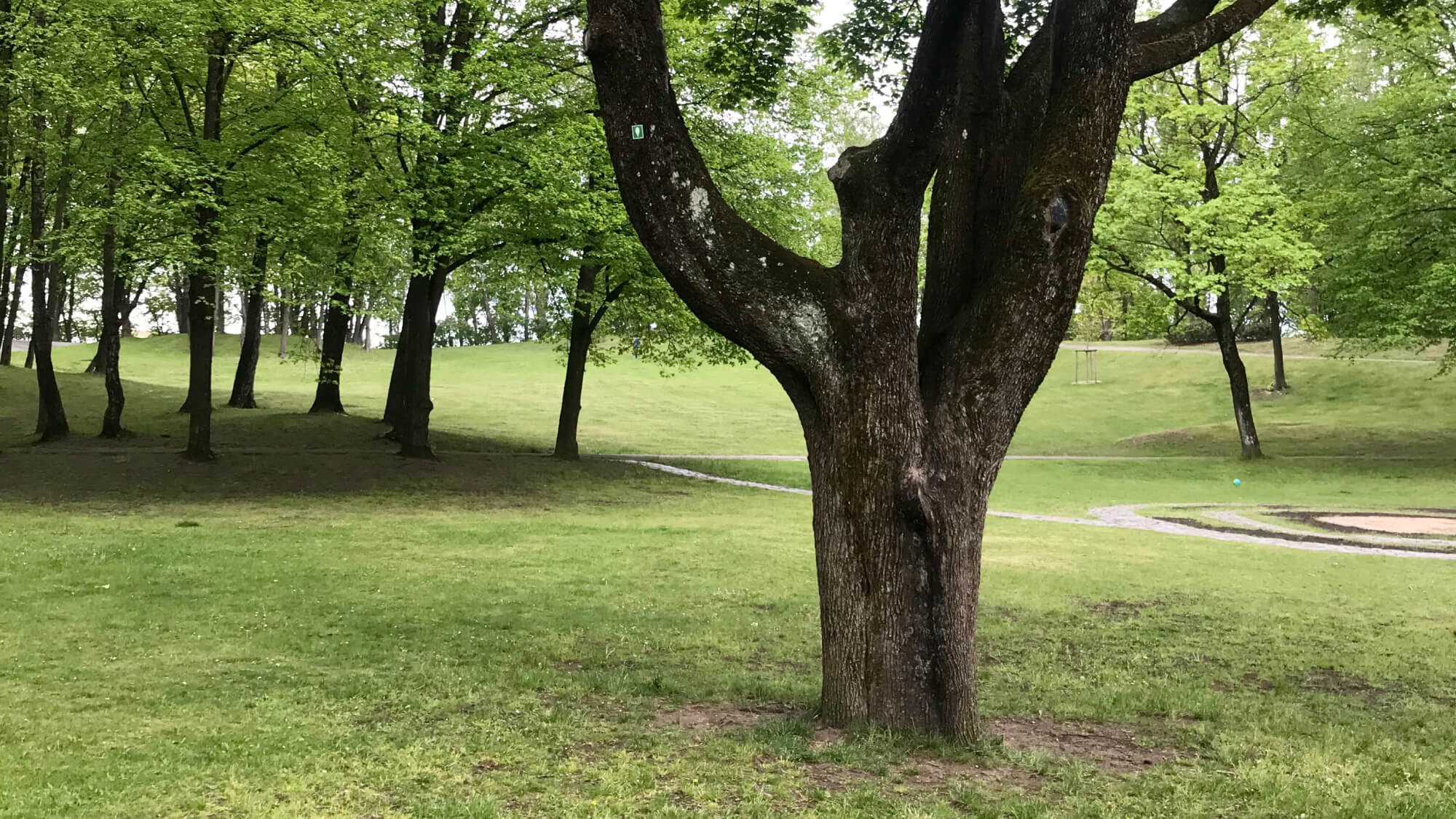
Dzegužkalns is a delightful pocket of greenery featuring an inviting open lawn that practically begs for a laid-back picnic. Tree-lined paths meander up and down gentle hills, creating a soothing rhythm for a stroll. The park’s charm lies in its simplicity: no grand landscaping or major landmarks, just a peaceful, well-maintained space.
It’s a favorite among joggers, fitness enthusiasts, and families with kids (thanks to the small playground). And there’s even a small outdoor stage tucked within the park.
Nordeķi Park offers its own unique charm. We come here to watch ducks gliding gracefully across the ponds and to check on the slow but promising restoration of the Nordeķi Manor.
Although the manor remains hidden behind a high fence and is still under renovation, you can see signs of progress. I’m hopeful that this historical gem will soon be fully restored.
Passing by you will also notice the statues within manors theritory on the opposite side of the pound. If we can believe the web, those were created during the 2005. sculpture symposium, “Tēlniecības desants.”
The park itself is well-maintained on one side, with a wide lawn, mature trees, and a children’s playground. There’s even a set of whimsical heart-shaped benches with leaves sprouting from their backs, adding a playful touch. We also stumbled upon a circular arrangement of plants that looks like it’s destined to grow into a miniature labyrinth – a guaranteed delight for the kids who always seem to be running through it.
When people think of Pārdaugava’s parks, Arkādija Park and Māras Pond are often the first to come to mind. And while they’re undeniably beautiful, if you’re ready to step off the beaten path, Dzegužkalns and Nordeķi Park offer a refreshing alternative. These two small but charming parks are perfect for a light spring or summer stroll, and are simply amazing in autumn colors, providing a peaceful retreat without straying far from the city’s pulse.
You step onto the forest path, and through the trees, glimpses of wide meadows and shimmering water come into view. As you venture closer, wild horses and cows roam freely, their silhouettes blending into the wild scene. Here at Lake Engure nature park, they don’t seem to be threatened by human presence. Right the opposite – if they sense you have a carrot with you, you’ll probably won’t be able to escape them.
Passing through a rustic wooden gate, the landscape opens up before you. Endless green meadows stretch toward the horizon, creating a sense of freedom that makes you pause and take it all in.
As you head toward a small bird watching tower, the Lake Engure meadow transitions into shallow pools of water, where tufts of grass stand submerged. You notice muddy patches—favorite spots for cows to roll around—and beyond, the meadows seamlessly blend into Engure Lake making it hard to tell where one ends and the other starts. Above the water, birds fill the air with their calls, adding a lively soundtrack to the serene scene.
Miks says that the last time he wisited Lake Engure Nature park the landscape was vastly different. Everything was submerged in water back then and the only way to get around was to use the wooden pathways. Today what is left over from those wooden pathways lies on dry ground. I don’t know if it is a seasonal thing or if Engure lake meadows are always like this. But anyways – the place is quite unique in any season.
Unfortunately a small disappointment awaits at the Lake Engure birdwatching tower—the walkway leading to it is broken and cordoned off, leaving climbing impossible. But the beauty of the surroundings more than makes up for it.
Wild Horses and Cows of Lake Engure Meadows
The meadows of Lake Engure are alive with wildlife, and it’s clear the animals here coexist peacefully with each other and the human visitors.
The cows seem shy, keeping their distance as they graze. Some wallow lazily in the mud, while others wander closer, still cautious of human presence. One bull stands proudly on a small rise, chewing grass with slow deliberation—he seems to be the boss of the herd, calmly surveying his domain.
A lone black cow lingers far from the group, looking slightly out of place, almost as if excluded. Life in the animal kingdom is surely worthy of a soap opera.
Also, did you know that these cows are here to help maintain the meadows naturally? Their grazing ensures the landscape thrives in its intended state. Quite a fascinating discovery!
Say Hi to Horses
The horses in Lake Engure nature park, however, are the opposite of the shy cows. Their curiosity and confidence bring them right up to visitors. Whether they’re hoping for a treat or simply basking in admiration, they stand gracefully on the paths, unbothered as people walk around them, cameras in hand. You notice some travelers have come prepared, pulling out bags of carrots and apples that the horses eagerly munch on. I do not know if it is actually allowed to feed these animals or not. So please do your research before offering them a treat.
The herd we encounter in Lake Engure nature park today includes five horses, their coats ranging from soft gray-brown to rich dark chestnut. They seem slightly smaller than the horses people ride, but their wild beauty is captivating. From their sturdy build to their gentle, watchful eyes, it’s clear they are perfectly at home in this untamed landscape.
As we stroll back to our car, after saying our goodbyes to the inhabitants of Engure lake meadows, we realize we’ve missed one feature of this nature park—the Orchid trail. Oh well, I guess it’s a reason to come back.
Thoughts?
Lake Engure Meadows is a haven of peace, a perfect stop for those seeking a quiet connection with nature. It is also one of the few places in Latvia where you can encounter wild horses up close. Families with children, couples on romantic walks, and groups of friends all wander the paths, marveling at the wild horses and cows that call this place home.
So I believe it would appeal to people of many different paths. Unless you are afraid of horses or cows. If that is the case, this probably won’t be the place for you.
When you think of towering cliffs, Latvia might not be the first place that springs to mind. While the country boasts plenty of intriguing rock formations, they often lack the dramatic scale seen elsewhere. But hidden within the lush forests not far from Cēsis lies a whole other world. Welcome to the Līču–Lanģu Trail—a place of towering sandstone cliffs, mystical engravings, and natural wonders waiting to be discovered.
Lace up your hiking boots, grab some water, and let’s uncover the secrets of the Līču–Lanģu cliffs together!
Location:Līču Lanģu cliffs. The easiest way to find the start of the trail is to put “Līču–Lanģu klintis” in Waze
Cost: Free
Length: We walked ~6km, but if you walk the full trail up to Liela ellite it is said to be ~9km
How to get there: Driving. Or you can take train to Lode. But the trains aren’t that frequent.
Atrašanās vieta:Līču Lanģu klintis. Bet pašu taciņas sākumu vieglāk atrast ierakstot Waze Līču Lanģu klinšu taka.
Izmaksas: bezmaksas
Accesibility: there are a lot of stairs and climbing over trees and other obstacles so the trail isn’t suited for people with mobility issues or baby strollers
The Challenge of Finding Līču-Lanģu Cliffs
The forest keeps its secrets well, and the Līču–Lanģu cliffs aren’t the easiest to find. We were tricked and almost left without seeing the best part of this trail. But don’t worry—this time, I’m here to guide you and point out what to look for.
Lode Quarry
After parking the car, we step into the forest and begin our journey. The first clue that you’re on the right path is the Lode Clay Quarry—an expansive valley with grayish-brown tones, uneven terrain, and only a hint of vegetation. It’s not quite a walk on Mars, but the otherworldly landscape might make you feel like you’ve stepped onto another planet—or perhaps Earth after an apocalypse.
First Cliff on Līču – Lanģu Trail is Just a Teaser
The first cliffs that can be easily recognised by their half circle shaped arches and distinctive orange colour is the next sign you are looking for.
Not that hard to find? True. But when we visited last time, this is where things went off track. While there are some signposts along the way, they can be a bit confusing. We ended up heading straight, wandering in a loop through the forest, only to return to the same spot—without glimpsing a single cliff. And we saw another bunch of travelers making the same mistake.
If you’ve ever been let down by photos of grand landmarks that turned out far less impressive in real life, it’s easy to feel discouraged at this point. But we didn’t give up. With determination (and a closer look at the map), we finally found the key to continuing our adventure.
So here it is.
If you’ ll head right, you’ll find beauty. If you head left you’ll find an adventure.
Turn Right to Discover the Mystical Letter “S” on the Līču – Lanģu Trail
Here lies what is arguably the most stunning rock formation along the Līču–Lanģu Trail. This natural masterpiece features organic shapes that resemble a portal or a locked gate to a hidden world beneath the mountain. On one side, there’s even a tiny “window” where you might imagine a troll guard sitting and watching over those who are trying to figure out the cliffs’ secrets.
The cliff is draped in moss, its surface adorned with countless engravings etched over the decades. Among them you spot a mysterious letter “S”—a mark that seems crafted with great skill and care. What could it signify? Is it a coat of arms, or perhaps the key to unlocking the stone gates to a secret world of trolls?
Turn Left to Discover the Majestic Cliff Wall of the Līču – Lanģu Trail
The rumors are true—on the Līču–Lanģu Trail, you’ll find cliffs reaching up to an impressive 30 meters high.
After returning to the first cliffs and heading left, the real adventure begins. At first, it seems the trail may not lead to anything remarkable, with the cliffs concealed behind the dense forest. But then, the trees part, revealing one of the forest’s best-kept secrets: a towering rock wall that will accompany us for the rest of the hike. It’s a breathtaking sight, both grand and humbling.
The path has it’s challenges, with ups and downs and the occasional rotten branch to climb over. But it also has some delightful surprises along the way. You’ll pass spots where water, unstoppable in its persistence, quietly carves through the sandstone. There are also countless engravings from travelers before you—one boldly marked 1937. Could it really be that old, or is someone playing a clever trick?
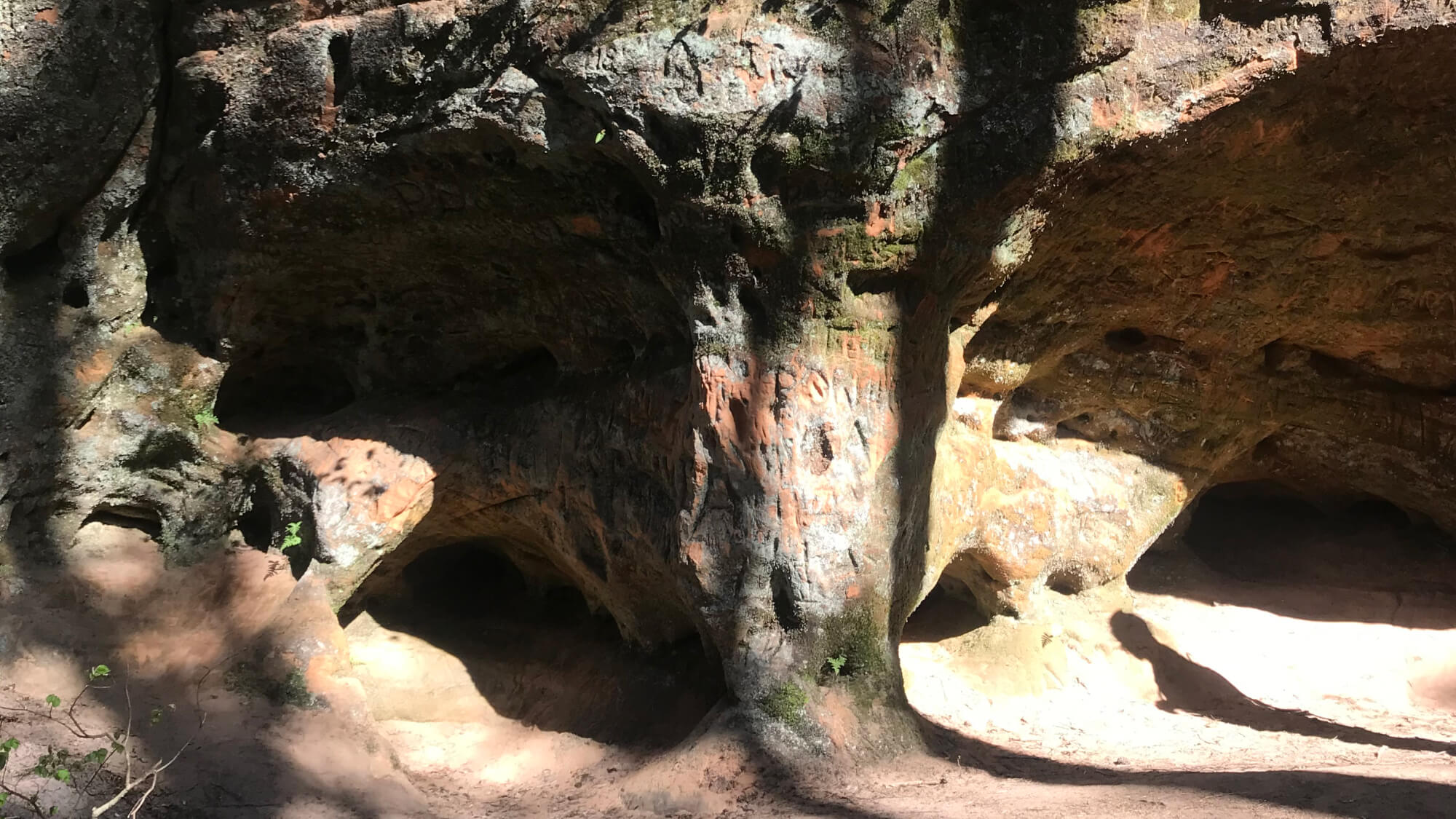
Further along, the trail reveals large vaults carved into the cliff wall. Another traveler pauses to snap a photo, joking that we’ve stumbled upon the “Little Gutmanis Cave,” a playful nod to Sigulda’s famous landmark.
Thoughts?
The Līču–Lanģu Trail is undeniably an exciting destination for a hike. That said, it’s important to note that it might not be suitable for everyone—be prepared for plenty of climbing, kneeling, and bending along the way. Despite the challenges, I’d rate this trail a solid 5/5 stars. Even the tricky task of finding the right path didn’t dampen the experience. In fact, I might go so far as to call it one of the most impressive nature trails in Latvia. I know that’s a bold statement, but Līču–Lanģu Trail truly delivers. Around every corner, there was something new to marvel at, and the towering cliffs left me absolutely speechless.
We use cookies to ensure that we give you the best experience on our website. If you continue to use this site we will assume that you are happy with it.